Friday, July 11, 2008

NEWS FROM AEFJN

Britain is the world’s biggest arms exporter Times, 18/06/2008

Britain was the world’s biggest arms seller last year, accounting for a third of global arms exports, the Government’s trade promotion organisation said. UK Trade and Investment (UKTI) said that arms exporters had added £9.7 billion in new business last year, giving them a larger share of global arms exports than the United States. « As demonstrated by this outstanding export performance, the UK has a first-class defence industry, with some of the world’s most technologically sophisticated companies. » Digby Jones, the Minister for Trade and Inestement said. UKTI said that the figures were boosted by orders from Eurofighter Typhoon jets from Saudi Arabia, the world’s biggest arms buyer, which has imported $ 31 billion in weapons over the past five years. There are also orders from Oman and Trinidad and Tobago for offshore patrol vessels. The US is still the world’s biggest exporter over the past five years, with $63 billion in total arms exports. Britain was second with $53 billion and Russia third with $33 billion.

Powerful new tool to diagnose drug-resistant TB http://tinyurl.com/6p3jdw
Clinical trials of a new molecular technique have found it to be effective at quickly identifying multidrug-resistant tuberculosis (MDR-TB) in resource-poor settings. As a result, the WHO has endorsed the use of the test in all countries with MDR-TB.

African continent faces ‘dramatic’ physician shortage
http://www.un.org/apps/news/story.asp?NewsID=27252
The United Nations World Health Organization (WHO) warned that Africa faces a “dramatic” shortage of physicians by the year 2015, according to a new study that has just been made public. It is projected that there will be nearly 13 million doctors by then, a figure that will meet demand and will exceed the target of achieving the benchmark of having 80 per cent of all live births covered by a skilled attendant. But given the imbalances in physician distribution, Africa will face a scarcity of care, WHO said, with 255,000 doctors in 2015, which is 167,000 fewer than needed to meet the birth coverage goal. The study notes that in 2004, Africa carried nearly one quarter of the world’s disease burden with only 2 per cent of global physician supply and less than 1 per cent of health expenditures worldwide. Similarly, South-East Asia bore 29 per cent of the global disease burden, with 11 per cent of the world’s supply of doctors and 1 per cent of health expenditures. Meanwhile, the American region, with 10 per cent of the world’s disease burden, accounted for half of the world’s health expenditures and one fifth of all physicians. Hefty increases in health-care investment and robust policies are essential to boost the number of doctors in Africa, WHO said. “Given the disproportionate burden of disease in this region, policies for increasing the supply of physicians are urgently needed to stem projected shortages,” according to the study.

The Taubira Report on Economic Partnership Agreements (EPAs)
Christiane Taubira, a left-wing French MP representing Guyana, was invited by Nicolas Sarkozy to produce a report to help the French Presidency of the EU formulate its stance on the EPAs that are being negotiated between the European Union (EU) and the Africa/Caribbean/Pacific (ACP) countries. Sarkozy asked her to clarify the European Commission’s intentions towards the ACP countries with these aims in mind: to restore a relationship of confidence; to enable all countries affected by the opening of the market to take full advantage of it; and to create a dynamic that favours development by promoting regional integration.

The MP gathered the opinions of more than 150 people, ministers, diplomats, negotiators, experts, social scientists and NGOs. She had two working sessions with each of the two European Commissioners responsible for EPA negotiations, Peter Mandelson and Louis Michel. She visited countries that are affected by the agreements to talk with specialists on food and development. In her report she sketches out ideas for resolving the problem areas of the current EPAs.

The report emphasises the need for a thorough review of the aim of the EPAs as well as of the mandate entrusted to the European Commission (EC) concerning its trade negotiations with the ACP countries. It comes out in favour of a revision of the EC’s method of working and suggests that the intention to finalise EPAs in October 2009 be reviewed. It proposes a re-think of the extent of the opening of the market for ACP states, the cornerstone of negotiations and major source of discontent among the ACP countries. The Economic Partnership Agreement envisages an almost total opening of the market – 100% for the European market and 80% for ACP countries – to bring competition into play. By bringing down most customs barriers, the African market risks being flooded with cheaper, better quality European goods. The compensation proposed by the EU will not make up for this, especially as customs duty is an important part of ACP income. The report also calls for greater transparency in the negotiation process and calls for European aid to be dissociated from trade negotiations.

In her report, the Guyana MP even tends towards a return to agreements without reciprocity, because, with the North and the South being at different stages of development, the same liberal rules cannot be applied to both sides. Madame Taubira places sustainable development at the heart of the EPAs. She suggests a cancellation of foreign debt for African states and devotes the first chapter to ways of putting an end to the food crisis and avoiding hunger riots. Her proposals aim to protect the right to food, to promote the development of ACP countries (instead of serving Europe’s trade interests) and to establish a genuine relationship of partnership between the EU and the 76 ACP countries, most of which feature among the poorest in the world. Taubira comes back to criticisms made by the NGOs and sides with those who wish to protect human values. AEFJN and other NGOs are delighted with the conclusions and recommendation in this report; they are in line with the messages that civil society in Africa and Europe has been sending since the beginning of negotiations. Her recommendations would represent a political about-turn for the EU and this is of great importance to those seeking partnership agreements ‘for development’.

This report was submitted to the Elysée Palace on June 15th. It has still not received the presidential green light for publication and so far no reaction to it has been expressed. Apparently the French government asked her to reconsider her views – but so far in vain. Christiane Taubira reaffirms that, in her opinion, the report should be published. Oxfam France Action is inviting Nicolas Sarkozy to bring these recommendations to the attention of the other member states of the Council of the European Union so that the EPAs may be real tools for development. The cause of the upset in this report is probably its critical tone. It pulls no punches in criticising an economic policy which, in the opinion of the author, has kept African countries in a state of dependence on the European market. Bearing in mind the fragility of the countries, reviving the EPAs without changing the format would be dangerous. She believes that such agreements would make very little difference to Europe but risk damaging whole sectors of the economies of ACP countries. The French presidency of the EU is supposed to be the beginning of a dynamic revival – and Taubira’s report was to prepare the ground. By not responding to the report, Nicolas Sarkozy is indicating that the European reaction will not be in favour of the report’s recommendations. The strategic economic relationship between Africa and Europe is at stake.
For the full report write to: begoinarra@aefjn.org

Call to Action to Stop the WTO Doha Round July 6, 2008
Ministers from dozens of countries, including the U.S., EU, Brazil, India, Indonesia, Philippines, South Africa, Kenya and Egypt, will meet in Geneva on July 21 to attempt to push through the conclusion of the WTO’s Doha Round. After years of negotiations, failed Ministerials, and re-starts, this is their “last chance” before President Bush leaves office. The Ministers are seeking to conclude this faltering round while pushing aside key global priorities like the food crisis, fuel prices, global warming, global poverty and debt.
If concluded, the expansion of the WTO will benefit large corporations – but will have profoundly negative impacts on workers, farmers, women, consumers, and the environment. Falsely labelled a “Development Round” the real consequences would be:

· Job loss, de-industrialization, and the foreclosing of development space for decades to come. Rich countries are demanding that developing countries provide “new market access,” meaning slashing protective tariffs on manufactured goods and natural resources.
· Farmers’ livelihoods, food security, and rural development would come under even greater pressure. The United States and Europe continue to subsidize their agribusiness exporters, while at the same time fighting against key protections for millions of farmers in developing countries. This is outrageous in the face of a global food crisis.
· Increased privatization and deregulation of services, including in key sectors such as finance and energy. Recent instability in global markets demonstrates the need for increased intervention in and oversight of global financial and other markets, not more deregulation.
· Global efforts to tackle climate change may be curtailed by the WTO expansion.
· The poorest countries will be the biggest losers. Economic projections of a potential Doha deal, by several think tanks and even the World Bank, show that the costs of lost jobs, reduced policy space, and lost tariff revenues far outweigh supposed “benefits” of the so-called “Development” Round.

We cannot risk allowing the Doha Round to conclude. Social movements and civil society organizations across the world must unite to oppose the corporate agenda of the WTO Doha Round. We call on all people to:

1. Organize national public pressure (media, mobilizations, campaigns) as your Trade Minister leaves for Geneva and from July 19-21, to ensure that your government acts in the interests of the people, not corporations or foreign governments. Basic Talking Points and a list of Call to Action Resources should be included in the attachments to this Call to Action; if they are not, please contact Verda Cook at verda.cook@gmail.com.
2. Demand a meeting with your Trade Minister to express your opposition to the Doha Round, demanding that they do NOT agree to a Doha conclusion – and let your government know that you are monitoring their activities in Geneva.
3. Contact the media and tell them about the negative impacts on the economy, workers, farmers, consumers, fisher folk, women, climate change, and the environment of the WTO.
4. Send a national letter, endorsed by a wide variety of social movements, to your national government (OWINFS will be circulating a sample letter which can be adjusted to your national context soon.)
5. Come to Geneva to lobby your Minister during the Ministerial Conference, 19-25 July, and tell the media in Geneva what you think about the Doha Round. Please contact Deborah James at djames@cepr.net if you are planning on travelling to Geneva.
Deborah James
Director of International Programs
Center for Economic and Policy Research
1611 Connecticut Avenue, NW, Suite 400
Washington, DC 20009
202 293 5380 x111
202 588 1356 fax
www.cepr.net


STOP EPAs Day, 27 September
Since 2004 every 27 September, the anniversary of the launch of the EPA negotiations is “Stop EPAs Day. This year 2008 EPA actions remain as necessary as ever as the EU is still pushing to make ACP countries accept their trade liberalisation recipe. All ACP regions have accepted to continue to negotiate, but it is not to be taken for granted that they are willing to accept the EU EPA package. European civil society must continue to denounce the EU approaches and continue to create space for alternatives.

Since the CARIFORUM EPA will be signed on 23 July and the interim EPAs may follow after summer, the European Parliament will be invited to give its assent (to ratify). Therefore we decided to focus on the European Parliament and its Members (MEPs). European organisations campaigning on EPAs will organize on Tuesday 23 September a demonstration/media-stunt in Strasbourg where the European Parliament Plenary will be in session at that moment. Representatives from ACP civil society organisations will be invited to join in Strasbourg and then, if possible to follow to our capitals for national actions towards national MEPs.

Go-ahead for more biofuels
David Adam and Alok Jha The Guardian, Tuesday July 8, 2008
Britain will continue to expand the use of biofuels in petrol and diesel for transport, despite an independent review that found that the fuels can drive up food prices and do little to combat global warming. Ruth Kelly, the transport minister, said yesterday that Britain needed to press ahead with biofuels as the technology could still prove beneficial, but their introduction would be slowed down. "I believe it is right to adopt a more cautious approach until the evidence is clearer about the wider environmental and social effects of biofuels," she said.

The move follows the publication of a review of the environmental and social impact of biofuels by Ed Gallagher, head of the Renewable Fuels Agency. The report recommended that more effective controls needed to be in place to prevent an inadvertent rise in emissions if, for example, forests are cleared to make way for biofuels. Food prices can also rise as competition for land increases. The report said that if left unchecked, current targets for biofuel production could cause a global rise in greenhouse gas emissions and an increase in poverty by 2020.

Chad: European Union peacekeeping force tries to tread lightly David Axe, Iriba 7/4/2008
IPS News http://ipsnews.net/africa/nota.asp?idnews=43079
EUFOR is deploying thousands of Polish, French, Irish, and Belgian soldiers and tonnes of equipment to build a major military base in Chad that every day uses tens of thousands of litres of water brought over fragile roads by French convoys from Abéché. Potable water from local wells, 8,000 litres - enough to meet the needs of 500 typical Chadian families - is also used from time to time. There is considerable friction among the local inhabitants.

One issue - water - may just prove too contentious for lasting compromise. Arid eastern Chad has always suffered water shortages. In 2004, a quarter-million Darfuri refugees settled in the region, placing further strain on local water sources. Intensive labor by a wide range of aid groups - drilling new wells, building dams to catch rainwater, opening up channels to feed rain into underground reservoirs - has alleviated but not eliminated the problem. Now EUFOR is deploying thousands of soldiers and tonnes of equipment, all requiring tens of thousands of liters of water per day - and water shortages have become a water crisis.
++++++++++++++++++++++++++++++++++++++++++++++++++
Disclaimer
No responsibility or liability shall attach itself to either myself or to the blogspot ‘Mozlink’ for any or all of the articles/images placed here. The placing of an article does not necessarily imply that I agree or accept the contents of the article as being necessarily factual in theology, dogma or otherwise.
Mozlink

Thursday, July 10, 2008

Peacekeepers in Sudan Lose 7 in Ambush

DAKAR, Senegal, July 10th. (NY Times) — Seven international peacekeepers were killed and 22 wounded in a brazen day ambush by heavily armed men in trucks and on horseback in the Sudanese province of Darfur, United Nations officials said Wednesday. The attack, on Tuesday, was the deadliest on international forces in Darfur since September 2007, when 10 peacekeepers were killed in an assault on a base, and was a severe blow to the combined United Nations and African Union peacekeeping force that has struggled to protect civilians and itself. About 200 men in 40 trucks descended on a convoy of peacekeeping soldiers and police officers about 60 miles east of their base in El Fasher, the regional capital, as they returned from patrol. They had been investigating allegations of abuses by a rebel faction allied with the government. The militiamen had heavy weapons, including antiaircraft and antitank guns mounted on their trucks, and a fierce firefight raged for three hours. The peacekeepers took heavy casualties. Five Rwandan soldiers were killed, with police officers from Uganda and Ghana, a United Nations official in Sudan said. Officials did not say who was responsible for the attack, and it has become increasingly difficult to determine who is who in the kaleidoscope of rebel movements and militia groups vying to control Darfur.

The conflict began five years ago as an uprising of non-Arab ethnic groups against the Arab-dominated government in Khartoum. But as the rebel groups and Arab militias have splintered and alliances have formed and faded, the Darfur region has become increasingly lawless and chaotic. “It is just a free-for-all,” said a Western aid official in Sudan, speaking on the condition of anonymity because aid workers have faced retribution for talking publicly about the conditions in Darfur. “Security simply doesn’t exist.” Attacks on aid workers by rebels, militia and bandits have been on the rise, and aid workers in the region say it is increasingly difficult to provide even the basics to the millions of needy civilians. Rising food and fuel prices have made it harder still to help the 2.7 million people displaced by the conflict in Sudan and neighboring Chad. The United Nations estimates that 300,000 people have died from violence, hunger and disease since the conflict began.

The new joint peacekeeping force, which took over from the African Union in January and was approved by Sudan after extensive negotiations, was supposed to help protect civilians from harm. But despite its goal of 26,000 troops, it has little more than a third of that number, most of whom are former members of the African Union force. The soldiers simply painted their green helmets blue. Further deployments have been stymied by logistical and political problems and stonewalling by the Sudanese government, United Nations and aid officials said. The prospects of a political solution to the Darfur crisis look equally grim.

The part-time United Nations and African Union mediators who had sought in vain to jump-start the peace process resigned in frustration last month over lack of progress and have been replaced by a full-time mediator for both organizations. But with the rebel groups fractured and unwilling to unite to seek a settlement to the crisis, peace seems more distant than ever. “The peace process is going nowhere,” said Alex de Waal of the Social Science Research Council in New York. “There is absolutely no incentive for either side to make a move.”
By LYDIA POLGREEN
+++++++++++++++++++++++++++++++++++++++++++++++++++
Disclaimer
No responsibility or liability shall attach itself to either myself or to the blogspot ‘Mozlink’ for any or all of the articles/images placed here. The placing of an article does not necessarily imply that I agree or accept the contents of the article as being necessarily factual in theology, dogma or otherwise.
Mozlink

Saturday, July 5, 2008

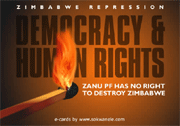
Exclusive: secret film reveals how Mugabe stole an election

Link to this video

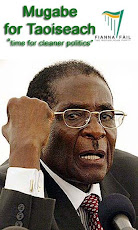
A film that graphically shows how Robert Mugabe's supporters rigged Zimbabwe's election has been smuggled out of the country by a prison officer. It is believed to be the first footage of actual ballot-rigging and comes as Zimbabwe's president faces growing international pressure.

Shepherd Yuda, 36, fled the country this week with his wife and children. He said that he hoped the film, which was made for the Guardian, would help draw further attention to the violence and corruption in Zimbabwe. Much of the footage was shot inside the country's notorious jail system. Yuda, who has worked in the prison service for 13 years, was motivated by the intensifying violence directed towards the opposition Movement for Democratic Change (MDC) and the murder, two months ago, of his uncle, a MDC activist. Initially he intended to chronicle secretly what life was like inside Zimbabwe's jails but he found himself present when a war veteran and Mugabe supporter organised the vote-rigging by getting prison officers to fill in their postal ballots in his presence. Using a hidden camera, Yuda filmed for six days prior to last Friday's run-off election in which Mugabe claimed victory with 90% of the vote. Morgan Tsvangirai, the MDC leader, had earlier said his party would not be participating in the run-off because of intimidation. "I had never seen that kind of violence before," said Yuda, of the run-up to the election. "How can a government that claimed to be democratically elected kill its people, murder its people, torture its people?"

The film, made for Guardian Films, shows how Yuda and his colleagues at Harare central jail had to fill in their ballots in front of Zanu-PF activists. Yuda also obtained footage of Zanu-PF rallies where voters were told they should pretend to be illiterate so that an official could fill in their ballot for them on behalf of Mugabe. He was able to film the MDC's general secretary, Tendai Biti, in leg irons in jail. Biti, now on bail, faces treason charges which carry the death penalty. Having completed filming, Yuda left Zimbabwe with his family for a new life and is now at a secret destination. "I don't regret doing this, although it is a painful decision I have taken," he said. "We can live without the memories of seeing dead bodies in the prison, dead bodies in the street, dead bodies in my family. "I've lost my uncle. My father was also beaten by Zanu-PF. I am praying to God: please God deal with Zanu-PF ruthlessly."

Mugabe has now been sworn in for a sixth term as Zimbabwe's president, a process which Tsvangirai described as "a complete joke". More than 130,000 voters spoiled their ballot papers in the election. International pressure is mounting against Mugabe. It emerged yesterday that a US draft resolution to the UN will call for sanctions against Mugabe and demand that his government immediately begin talks with the MDC. If adopted by the Security Council, the resolution would freeze the financial assets of Mugabe and 11 other Zimbabwean officials and ban them from travelling.
+++++++++++++++++++++++++++++++++++++++++++++++++++
Disclaimer
No responsibility or liability shall attach itself to either myself or to the blogspot ‘Mozlink’ for any or all of the articles/images placed here. The placing of an article does not necessarily imply that I agree or accept the contents of the article as being necessarily factual in theology, dogma or otherwise.
Mozlink

Film of Zimbabwe 'Vote-Rigging'

Robert Mugabe is sworn in on 29 June
The film alleges there was no secrecy in votes for Robert Mugabe

New evidence of vote-rigging in last month's presidential election in Zimbabwe has emerged in the form of a secret film made by a prison guard.
The guard, Shepherd Yuda, filmed the vote-rigging at his jail in a production for Guardian Films. Prison officers, including Mr Yuda, who has now fled Zimbabwe, were forced to vote for President Robert Mugabe by superior officers. The officers organised a postal ballot and stood over them as they cast votes. Mr Yuda decided to speak out after the murder of his uncle, an opposition activist, two months ago. He knew he and his family would have to leave Zimbabwe as a result.

"This election: I have never seen that type of violence," he says in the film. The impact has left a lot of orphans; it has left a lot of people displaced. You cannot expect that from your government." He secretly filmed a war veteran, Superintendent Shambira, watching as prison officers voted. Supt Shambira ensured they marked their ballots for Robert Mugabe, and not the opposition candidate, Morgan Tsvangirai. Supt Shambira then logged each vote against an identification number. There was no secrecy. All those voting knew Supt Shambira had the power to condemn them as MDC supporters. Mr Yuda says he had no choice but to vote for Robert Mugabe. Mr Yuda also spoke to voters on the streets of Harare. "They're standing right in front of you when you cast your vote," one voter told Mr Yuda. "They watch." The voter went on: "Shambira definitely sees you vote - there's no way of hiding it. I was thinking I could vote when he wasn't looking, but he was watching like a hawk."

Among the prisoners is Tendai Biti, a prominent opposition MP and human-rights lawyer. Mr Yuda filmed him having his leg-irons removed for a court hearing. Mr Biti, who is awaiting trial on treason charges, was released on bail, but could still face execution.

Newspaper reports election victory, 30 June
Mr Mugabe won the run-off election after the opposition pulled out

"You know, I was so touched: for a man of his status to be reduced to such levels, to be put in a criminal institution," Mr Yuda says in the film. "It's very, very sad." Mr Yuda also captured conversations between prison guards in the run-up to the 27 June run-off election, as tension was increasing. "In my area, there's a lot of tension," one guard tells him. "Zanu-PF (ruling party) thugs came to my house as soon as I left for work today. They abducted my wife. They took her to the base." These "bases" are springing up in private houses all over Harare. Previously they were a feature of rural Zimbabwe; now they have reached the capital. Ordinary people are abducted and compelled to attend Zanu-PF re-education rallies. "I am forced to go and guard these bases all through the night, after my shift here," another prison officer says. "They cordon off the whole street: it becomes a no-go area. These people are killers, the thugs that Zanu-PF are using." And another guard says the rest of the world should do more to help Zimbabwe. "It's in the hands of the international community now," he says. "[South African President] Thabo Mbeki has betrayed us. He didn't want to come down hard on Mugabe. Instead, he kept going on and on about pan-Africanism."

On election day itself, Mr Yuda films a woman who is so fearful that she has pretended to have voted. She colours her little finger with a pink marker, hoping to simulate the ink used to identify those who have already cast their ballots. The day after Robert Mugabe's election, Shepherd Yuda and his family began packing, preparing to leave Zimbabwe. Their lives would have been in danger if they had stayed. They can only begin to think about returning once Mr Mugabe has gone.
By Alix Kroeger
BBC News
+++++++++++++++++++++++++++++++++++++++++++++++++++
Disclaimer
No responsibility or liability shall attach itself to either myself or to the blogspot ‘Mozlink’ for any or all of the articles/images placed here. The placing of an article does not necessarily imply that I agree or accept the contents of the article as being necessarily factual in theology, dogma or otherwise.
Mozlink

A Fearful Day in Zimbabwe

Election Day in Zimbabwe - Courtesy of NY Times
+++++++++++++++++++++++++++++++++++++++++++++++++++
Disclaimer
No responsibility or liability shall attach itself to either myself or to the blogspot ‘Mozlink’ for any or all of the articles/images placed here. The placing of an article does not necessarily imply that I agree or accept the contents of the article as being necessarily factual in theology, dogma or otherwise.
Mozlink

Congolese Politician Goes Before International Court

Jean-Pierre Bemba, a senator and former militia leader accused of war crimes, appeared in court in The Hague on Friday.
THE HAGUE July 5th. (NY Times)— When Jean-Pierre Bemba, a rich and powerful Congolese politician, visited his family in Brussels in late May, he had no inkling that he would be grabbed by the Belgian police, thrown in jail and put before an international tribunal. His arrest warrant had been kept secret by the International Criminal Court in The Hague. On Friday, Mr. Bemba, a former vice president and still a sitting senator in Congo, made his first appearance in court. Mr. Bemba, once a rebel leader, has been accused of war crimes and crimes against humanity in a 2002-2003 campaign by his forces fighting to Congo’s north in the Central African Republic. Mr. Bemba, who lost Congo’s pivotal presidential election in 2006, is the most senior suspect now in the custody of the court, which holds three other Congolese accused of large-scale human rights violations.

The prosecution is expected to focus on sexual violence, charging that Mr. Bemba’s fighters gang-raped women of all ages in public places, infecting many of them with H.I.V., the virus that causes AIDS. Prosecutors contend that the fighters also tortured and pillaged, leaving victims dead, wounded or traumatized. Human rights groups have long said that Mr. Bemba’s militiamen were aiding the Central African Republic’s president at the time, Ange-Félix Patassé, whose forces terrorized civilians in retribution for a coup attempt. During the short hearing on Friday, Mr. Bemba was not asked to enter a plea, but he has denied the charges. He waved to his wife in the court’s public gallery and was asked by the court only to confirm his identity and the conditions of his detention. “The conditions are not the best, not what I had hoped for,” said Mr. Bemba, who gave his occupation as “senator.”

Mr. Bemba, 45, is a scion of a prominent Congolese family with a large business empire. He is still an important opposition figure with a considerable following, even though before being arrested he had spent the past year in Portugal. He had fled Congo amid clashes between his forces and the government. At home, his angry supporters have denounced the court in The Hague. In Brussels, Congolese immigrants have protested his arrest on the streets, wearing T-shirts adorned with Mr. Bemba’s photograph. This week the office of the prosecutor, Luis Moreno-Ocampo, had a serious setback in another case linked to Congo.

On Wednesday, judges ordered the release of another Congolese warlord, Thomas Lubanga, just as his trial was about to begin. It was to have been the very first trial since the permanent criminal court was created in 2002. Judges ruled that mishandling of the evidence by the prosecutor’s office meant that Mr. Lubanga could not receive a fair trial. The prosecution has appealed the decision, and Mr. Lubanga will have to stay in the court’s prison in The Hague while the appeal is considered. The Lubanga episode has prompted surprise and discomfort in the large legal community of this city. It also cast a shadow over this week’s marking of the 10th anniversary of the Rome Statute, which created the court.
By MARLISE SIMONS
+++++++++++++++++++++++++++++++++++++++++++++++++++
Disclaimer
No responsibility or liability shall attach itself to either myself or to the blogspot ‘Mozlink’ for any or all of the articles/images placed here. The placing of an article does not necessarily imply that I agree or accept the contents of the article as being necessarily factual in theology, dogma or otherwise.
Mozlink

Thursday, July 3, 2008

Vatican Votes To Elevate Father Damien To Sainthood

July 2nd: - The Congregation of the Causes of Saints at the Vatican has voted to canonize Father Damien of Molokai to sainthood. After the verification of two medical miracles, after decades of investigation into the life and works of Damien De Veuster, the Consisterie at the Vatican has at long last voted to elevate the Martyr of Molokai to its Pantheon of Saints. The measure now awaits the signature of Pope Benedict XVI. "People are very excited because they know he was a great person and role model, and that is the most important thing of the sanctification, he finally can be the role model we need," Damien historian Hilde Eynikel told KITV from Belgium.

The search is now on for a relic of Father Damien, which will be presented to the pope at the sanctification. A relic can be something touched by the saint, worn by the saint, or an actual body part of the saint. The diocese in Brussels is now looking into the retrieval of such a relic from Damien's tomb in Leuven, Belgium.

Damien's grave in Kalaupapa contains only his right hand, which was re-interred following his beatification in 1995. The canonization will take place in Rome, possibly at the end of next year, with celebrations in Belgium and Hawaii. The pope will probably not travel to Hawaii. Cardinal Daneels of Belgium may be in attendance. Supporters of the sainthood effort are overjoyed that now the world will know what Hawaii has known for 100 years -- that Father Damien of Molokai is a saint.

He was born Joseph De Veuster in Tremeloo, Belgium, in 1840. De Veuster's older brother, Pamphile, was set to travel to the "Sandwich Islands," but was too sick to go. Instead, De Veuster traveled to Hawaii in his brother's place. The Roman Catholic priest arrived in Hawaii in 1864 and took the name Damien. He served the leprosy patients at the Molokai colony at Kalaupapa for 12 years before he succumbed to Hansen's disease at age 49. His body was exhumed from his Molokai grave in 1936 when his remains were sent to Belgium, for reburial. In 1995, a relic of his right hand was given back to the Hawaii Diocese and returned to his Molokai grave.
+++++++++++++++++++++++++++++++++++++++++++++++++++
Disclaimer
No responsibility or liability shall attach itself to either myself or to the blogspot ‘Mozlink’ for any or all of the articles/images placed here. The placing of an article does not necessarily imply that I agree or accept the contents of the article as being necessarily factual in theology, dogma or otherwise.
Mozlink

Tuesday, July 1, 2008

Undeterred by Criticism, Mugabe Joins Peers at African Union Meeting

President Robert Mugabe of Zimbabwe, center, was escorted past journalists by his security detail in Sharm el Sheik, Egypt. (European Pressphoto Agency)
SHARM EL SHEIK, Egypt: July 1st. (NY Times) — Unabashed by critics and challenging his peers to prove their own democratic credentials, President Robert Mugabe of Zimbabwe went to an African Union meeting here on Monday, displaying his victory in a one-candidate election that his neighbors said did not “represent the will of the people of Zimbabwe.” The trip, his first formal act after being inaugurated Sunday to a sixth term, showed his determination to take his seat among African leaders despite international criticism. The rebukes included a pronouncement from southern African election monitors that last Friday’s presidential runoff was not free, fair or credible. The African Union’s own election observers concluded Monday that the vote “fell short” of the organization’s standards. But African leaders showed little appetite for public confrontation with Mr. Mugabe. Mr. Mugabe, 84, once hailed as a liberation hero, slumped in an armchair in a cavernous conference hall at this Red Sea resort, using a headset to follow speeches that, in part, demanded negotiations to end his absolute power.

Asha-Rose Migiro, the UN deputy secretary general, told the African leaders here that they had reached a “moment of truth. We are facing an extremely grave crisis,” Ms. Migiro said. “This is the single greatest challenge to regional stability in southern Africa, not only because of its terrible humanitarian and security consequences, but because of the dangerous political precedent it sets. Only dialogue between the Zimbabwean parties, supported by the African Union and other regional actors, can restore peace and stability to the country,” she said. That call for discussions was echoed in South Africa, the main regional power broker. Its Foreign Ministry urged Mr. Mugabe and the opposition leader, Morgan Tsvangirai, to “enter into negotiations which will lead to the formation of a transitional government that can extricate Zimbabwe from its current political challenges.” According to the official tally of Friday’s election, Mr. Mugabe won some 85 percent of the ballot. But his opponent, Mr. Tsvangirai, pulled out of the race days before the voting, citing widespread violence and intimidation. Mr. Tsvangirai took refuge in the Dutch Embassy in Harare five days before the election. Even in the closing stages of his campaign, Mr. Mugabe served notice that he “was prepared to face any of his African Union counterparts disparaging Zimbabwe’s electoral conduct because some of their countries had worse” election records, the state-run newspaper The Herald reported Monday.

In a statement on Monday, Mr. Tsvangirai’s party, the Movement for Democratic Change, urged the meeting participants here to reject the results of the runoff and to appoint “up to three African envoys to work full time on the crisis until it is resolved.” At present, President Thabo Mbeki of South Africa is the sole mediator in the crisis. The statement repeated Mr. Tsvangirai’s claim that Mr. Mbeki was “too partial” toward Mr. Mugabe. One of the few African voices raised publicly against Mr. Mugabe on Monday was that of Raila Odinga, the prime minister of Kenya, where elections last December set off bloody confrontations until a power-sharing deal was brokered. Some have depicted that deal as a potential model for Zimbabwe. Speaking in Nairobi, Mr. Odinga urged the African Union to suspend Mr. Mugabe until new elections could be held.

Mr. Tsvangirai won 48 percent of the vote to Mr. Mugabe’s 43 percent in the first round of the presidential election on March 29. In parliamentary elections on the same day, the opposition party won control of the lower house. Each man wants any negotiations to be based on his own electoral arithmetic — Mr. Tsvangirai’s from March 29 and Mr. Mugabe’s from Friday. “Sooner or later, as diverse political parties, we shall start serious talks,” Mr. Mugabe said in a speech after his inauguration, The Associated Press reported. The African Union meeting was supposed to address developmental issues, but has come under the shadow of the Zimbabwean crisis. For Mr. Mugabe, his unchallenged presence among fellow African leaders offers what his aides depict as legitimacy.

Thokozani Khupe, the vice president of Mr. Tsvangirai’s political party, said in an interview here on Monday that the opposition wanted the establishment of a “transitional authority” based on the outcome of the March 29 vote, a formula that would give Mr. Tsvangirai the upper hand. “Zimbabwe is burning,” Ms. Khupe said. “It is on fire. It is important that the African leaders save it before it burns beyond recognition.” The United States ambassador to the United Nations, Zalmay Khalilzad, said Monday that the United States might introduce a Security Council resolution this week to impose formal sanctions against members of the Mugabe government. Given that Mr. Mugabe flouted last week’s statement from the Council calling for an end to the violence surrounding the elections, the Council has to act in some manner, the ambassador said. “I’m pretty confident that the Council cannot remain silent on this issue,” Mr. Khalilzad told reporters. Although the 15-member Council passed a unanimous statement condemning the violence in Zimbabwe a week ago, an attempt to declare the runoff illegitimate on Friday sank after South Africa, one of the Council members, led the opposition to further criticism, saying Africans should resolve the issue. Mr. Khalilzad expressed confidence that the United States could muster the nine votes needed to push the sanctions through, but predicted that doing so would involve “tough” negotiations. “We are looking for focused sanctions on the regime itself,” he said. “Those who would oppose such action would have a lot to explain.”
By KENNEDY ABWAO and Alan Cowell
+++++++++++++++++++++++++++++++++++++++++++++++++++
Disclaimer
No responsibility or liability shall attach itself to either myself or to the blogspot ‘Mozlink’ for any or all of the articles/images placed here. The placing of an article does not necessarily imply that I agree or accept the contents of the article as being necessarily factual in theology, dogma or otherwise.
Mozlink

Saturday, June 28, 2008


+++++++++++++++++++++++++++++++++++++++++++++++++++
Disclaimer
No responsibility or liability shall attach itself to either myself or to the blogspot ‘Mozlink’ for any or all of the articles/images placed here. The placing of an article does not necessarily imply that I agree or accept the contents of the article as being necessarily factual in theology, dogma or otherwise.
Mozlink

Wednesday, June 25, 2008

A.N.C. Rejects Outside Pressure on Zimbabwe

President Robert Mugabe of Zimbabwe at an election rally in Banket on Tuesday. (European Pressphoto Agency)
June 25th. (NY Times) - Despite an increasingly thunderous chorus of complaints that Zimbabwe's presidential runoff will be neither free nor fair, the African National Congress, South Africa’s ruling party, rejected any outside diplomatic intervention in the matter on Tuesday, arguing that “any attempts by outside players to impose regime change will merely deepen the crisis.” The A.N.C. warned against international intervention a day after the UN Security Council took its first action on the electoral crisis in Zimbabwe, issuing a unanimous statement condemning the widespread campaign of violence in the country and calling on the government there to free political prisoners and allow the opposition to rally its supporters. But South Africa, the region’s powerhouse, is widely considered to play the pivotal role in bringing about change in neighboring Zimbabwe. And while the A.N.C. came out with an unusually strong condemnation of the Zimbabwean government on Tuesday, saying it was “riding roughshod over the hard-won democratic rights” of its people, the party also evoked Zimbabwe’s colonial history and insisted that outsiders had no role to play in ending its current anguish. “It has always been and continues to be the view of our movement that the challenges facing Zimbabwe can only be solved by the Zimbabweans themselves,” the statement said. “Nothing has happened in the recent months has persuaded us to revise that view.”

In what seemed a clear rebuke to the efforts of Western nations to take an aggressive stance against the Zimbabwean government, the A.N.C. included a lengthy criticism of the “arbitrary, capricious power” exerted by Africa’s former colonial masters and cited the subsequent struggle by African nations to grant newfound freedoms and rights. “No colonial power in Africa, least of all Britain in its colony of ‘Rhodesia’ ever demonstrated any respect for these principles,” the A.N.C. said, referring to Zimbabwe before its independence. Still, the statement’s blatant castigation of Zimbabwe’s government reflected the increasing frustration with the nation’s strongman president, Robert Mugabe. Amid the international outcry over his government’s handling of the crisis, Mr. Mugabe was reported Tuesday as hinting that he might be open to talks with the beleaguered opposition, but only after he won the election. His longtime rival, Morgan Tsvangirai, withdrew from a runoff scheduled for Friday because of the widespread violence and intimidation facing his party and its supporters. Mr. Mugabe was quoted on Tuesday as insisting that the ballot would proceed as he has planned. But in a speech in western Zimbabwe, Reuters reported, Mr. Mugabe referred to comments by Mr. Tsvangirai offering talks if the violence ended. “He now says he wants to negotiate,” Mr. Mugabe was quoted as saying. “We say we won’t refuse to negotiate but for now there is only one thing for us to accomplish.” His remarks were the most explicit affirmation that he intends to go through with an election condemned as flawed and illegitimate from a growing roster of organizations, politicians and governments from the UN to South Africa. But the hint of readiness to talk was also the first indication that Mr. Mugabe might negotiate — as South Africa’s President Thabo Mbeki has been urging him to — once he has secured what he could depict as a position of strength. Mr. Tsvangirai has been badly weakened by the widespread attacks on his top officials and foot soldiers alike, and has been taking refuge at the Dutch Embassy in the capital, Harare. On Tuesday, he said he would leave his temporary sanctuary there within 48 hours following moves by Dutch authorities to assure his safety.

The A.N.C. statement was not signed by any individual in the A.N.C. and seemed to represent a marked departure from Mr. Mbeki’s refusal to castigate Mr. Mugabe. The A.N.C statement was the first official response from South Africa since Mr. Tsvangirai’s withdrawal from Friday’s planned runoff and the Security Council’s conclusion late Monday that it would be “impossible for a free and fair election to take place” in Zimbabwe. The country, once one of Africa’s most prosperous, has been reeling from a widening campaign of violence and intimidation ever since Mr. Mugabe, Zimbabwe’s president for nearly 30 years, came in second in the initial round of voting on March 29. In a radio interview on Tuesday, Mr. Tsvangirai said that the Security Council statement blamed the violence on Mr. Mugabe’s leadership. “I think it’s a very important resolution,” he told Dutch public broadcaster Radio 1. “It recognizes the people who are accountable for the violence, and it squarely placed that responsibility at Mugabe’s leadership. I am sure that he can no longer remain defiant to that international position.” Mr. Tsvangirai reiterated his decision to boycott the vote on Friday. “It’s ridiculous to go into an election of that kind,” he said. “It’s a one-man competition.” His spokesman, George Sibotshiwe, said Tuesday that Mr. Tsvangirai took refuge in the embassy after learning that soldiers were converging on his home, The Associated Press reported. “The moment you have soldiers coming your way, you just run for your life,” Mr. Sibotshiwe said. “The only way he can protect himself is to go to an embassy.” Dutch officials said Mr. Tsvangirai had not requested political asylum. Mr. Sibotshiwe, Mr. Tsvangirai’s closest aide, himself fled to South Africa on Monday as the police raided the opposition party headquarters, rounding up dozens of people, including women, children and those injured in recent political violence. Mr. Sibotshiwe arrived in Johannesburg, and in an interview shortly afterward said he saw four men armed with pistols approaching the door of his safe house on Sunday morning and only narrowly escaped capture.

On Monday, the United Nations secretary general, Ban Ki-moon, sharply condemned the violence seizing the impoverished nation and took the unusual step of calling for the runoff to be postponed, saying a vote under the current conditions “would lack all legitimacy.” “It will only deepen divisions within the country and produce a result that cannot be credible,” Mr. Ban said of the runoff, adding that he had spoken with “a number of African leaders” and found a consensus that it would be wrong to proceed with the vote. “There has been too much violence, too much intimidation,” he said. The statement from the Security Council went through several drafts before it won the required unanimous acceptance of all 15 members. Britain led an effort, dominated by the West, to include the toughest language, while South Africa and allies including China and Russia pushed to dilute it somewhat.

Mr. Mugabe, however, has shown disdain for international criticism, so it remained unclear whether the Security Council’s statement would carry more weight in prompting his government to relax its oppressive measures than any previous condemnations from foreign leaders. Boniface G. Chidyausiku, the United Nations ambassador from Zimbabwe, said that neither the statement from the Council nor the call by Mr. Ban to postpone the vote would affect the timing of the elections. “The Security Council cannot micromanage elections in any particular country,” Mr. Chidyausiku told reporters. “As far as we are concerned, the date has been set.” He accused Britain and its allies of pushing for “regime change” and said Mr. Tsvangirai’s decision to drop out of the election was a ploy to attract international sympathy. He also said the opposition in Zimbabwe was exaggerating the violence. “These are M.D.C. tricks that should be seen for what they are,” he said in a speech, referring to the Movement for Democratic Change. “The British government’s hidden hand in all these political developments is evident and clearly visible.” Sir John Sawers, the British ambassador to the United Nations, expressed astonishment that Zimbabwe could so readily dismiss the opinion of the Council. “I find that incredible,” he told reporters. “The actions of this regime are unpredictable, and they will pursue only those courses of action which are in their own self-serving interests.”

Mr. Mugabe may also face increasing pressure from his fellow heads of state in southern Africa. Foreign ministers from a regional bloc of 14 nations known as the Southern African Development Community met on Monday in Angola to discuss the crisis. But the nations in the region have long been divided on the matter, and it is far from clear they will find enough common ground to act decisively. The president of South Africa, Thabo Mbeki, chosen by the 14-nation bloc as mediator in the Zimbabwean crisis, has long maintained a strategy of quiet diplomacy, pushing for negotiations between Zimbabwe’s opposition and ruling parties, without criticizing Mr. Mugabe publicly. In a significant show of support for Mr. Tsvangirai, however, the powerful Congress of South African Trade Unions declared on Tuesday that it was “appalled at the levels of violence and intimidation being inflicted on the people of Zimbabwe by the illegitimate Mugabe regime.” “The June 27 presidential election is not an election, but a declaration of war against the people of Zimbabwe by the ruling party,” the union group added. Urging a blockade of Zimbabwe, it said, “We call on all our unions and those everywhere else in the world to make sure that they never ever serve Mugabe anywhere, including at airports, restaurants, shops, etc. Further we call on all workers and citizens of the world never to allow Mugabe to set foot in their countries.” Botswana, Tanzania and Zambia have also harshly condemned the repeated detention of Zimbabwean opposition leaders during the campaign, as well as the violence against opposition supporters. South Africa had resisted efforts to bring Zimbabwe’s political woes before the Security Council, contending that they were a domestic matter, not an international one. On Monday, the wrangling over the Council statement took most of the day. Opponents of a tougher stance by the Council succeeded in quashing an attempt to say that without a second round of elections, Zimbabwe should rely on the results of the first round in March. In that election, Mr. Tsvangirai won more votes than Mr. Mugabe, but, according to the official government count, less than the majority needed to avoid a runoff. Jendayi E. Frazer, the American assistant secretary of state for African affairs, said in an interview on Monday that adding a mediator whom Mr. Tsvangirai trusts would be helpful, but she said that Mr. Mugabe had voiced no interest in talks. “It’s going to require an international push to prevent a civil war,” she said.
By Alan Cowell and Celia W. Dugger
+++++++++++++++++++++++++++++++++++++++++++++++++++
Disclaimer
No responsibility or liability shall attach itself to either myself or to the blogspot ‘Mozlink’ for any or all of the articles/images placed here. The placing of an article does not necessarily imply that I agree or accept the contents of the article as being necessarily factual in theology, dogma or otherwise.
Mozlink

Sunday, June 22, 2008

Hundreds Feared Dead in Philippines

A passenger ferry, MV Princess of the Stars, capsized off the central Philippine island of Sibuyan.
MANILA, Philippines: June 23rd. (NY TIMES) — The death toll from the powerful typhoon that killed more than 100 people in the Philippines last weekend could rise sharply after a ferry carrying more than 700 passengers and crew members capsized in the central part of the island chain , officials said.
The Red Cross reported that at least 137 people had been killed in the hurricane, not including those confirmed dead after the ferry sinking. Glenn Rabonza, executive director of the National Disaster Coordinating Council, said casualty figures were difficult to confirm because of extremely bad weather that was hampering search and recovery operations. On Sunday, the coast guard said it had reached the spot near the island of Sibuyan where the passenger ferry, the Princess of the Stars, had capsized a day earlier.

Officials said they found no survivors apart from four passengers rescued earlier in the day. Officials said the bodies of four passengers had also been recovered earlier in the day. Nanette Tansingco, mayor of San Fernando, Sibuyan’s largest town, told DZMM radio on Sunday that witnesses had described “the boat upside down with a big hole in the hull.” She said island villagers had reported seeing slippers and other belongings washing ashore, and other witnesses offered similar accounts. One of the survivors, Jesus Gica, told a radio station that he saw passengers losing consciousness and children unable to wear their life vests. “Many of us jumped from the ship,” he said. “The waves were big.” He also said elderly people, unable to escape, had been trapped underneath the sunken ferry.

Dozens of relatives of the passengers went to the ferry company’s office in Manila, demanding to know what happened to their loved ones. “I’m very worried,” Felino Farionin told The Associated Press. “I need to know what happened to my family.” He said his wife, son and in-laws were on the ferry. According to the government, the ferry was carrying 702 passengers, 45 of them children and infants, and 121 crew members.

The typhoon, Fengshen, made landfall on Saturday and battered several provinces. Its wind and rain knocked down power lines in the capital and elsewhere, caused landslides and capsized small boats. Fengshen, its winds at more than 90 miles per hour, caused more destruction in the northern Philippines but was headed out of the country on Sunday afternoon, weather officials said. The bad weather hampered efforts to locate the Princess of the Stars and its passengers, coast guard officials said. “They haven’t seen anyone,” Lt. Senior Grade Arman Balilo, a spokesman for the coast guard, told The Associated Press. “They’re scouring the area. They’re studying the direction of the waves to determine where survivors may have drifted.” Officials were checking reports that some people reached a nearby island and that a raft was spotted off another, said a coast guard spokesman, Cmdr. Antonio Cuasito, The Associated Press reported. “We can only pray that there are many survivors so we can reduce the number of casualties,” he said.

President Gloria Arroyo, who is in the United States for a state visit, scolded coast guard officials during a teleconference on Sunday for allowing the ferry to sail despite warnings about the typhoon. She ordered government agencies to coordinate rescue and relief efforts. The coast guard said the Princess of the Stars was allowed to leave Manila on Friday evening for Cebu, a city in the central Philippines, because the storm had not yet made landfall. Coast guard officials said the ferry should have been big enough to sail and that a warning issued earlier on Saturday barred only small boats from traveling. In Iloilo Province, in the central Philippines, the governor, Neil Tupaz, reported that 59 people had died and that more than two dozen others were missing. “Iloilo is like an ocean,” Mr. Tupaz said in a radio interview. Officials said tens of thousands of displaced residents were moved to evacuation centers. Flights were canceled and Monday classes suspended. Each year, about 20 typhoons slam into the Philippines, an archipelago bordering the Pacitic in the path of the storm systems.
By CARLOS CONDE
+++++++++++++++++++++++++++++++++++++++++++++++++++
Disclaimer
No responsibility or liability shall attach itself to either myself or to the blogspot ‘Mozlink’ for any or all of the articles/images placed here. The placing of an article does not necessarily imply that I agree or accept the contents of the article as being necessarily factual in theology, dogma or otherwise.
Mozlink

Zimbabwe Opposition Leader Pulls Out of Runoff

At a news conference in Harare on Sunday, Morgan Tsvangirai said he would not ask his party’s supporters to go to the polls “when that vote will cost them their lives.” (Alexander Joe/Agence France-Presse — Getty Images)
JOHANNESBURG, June 23rd. (NY Times) — Only five days before Zimbabwe's presidential runoff election, the opposition leader Morgan Tsvangirai announced Sunday that he was pulling out of the race because armed forces backing President Robert Mugabe have made it clear that anyone who votes for Mr. Tsvangirai faces a real possibility of being killed. At a news conference, Mr. Tsvangirai, who leads the opposition Movement for Democratic Change, or M.D.C., said he was unwilling to ask the party’s supporters to go to the polls on Friday “when that vote will cost them their lives.” Mr. Tsvangirai’s decision came on a day when governing party youth militia armed with iron bars, sticks and other weapons beat his supporters as they sought to attend a rally for him in Harare. It was the latest incident in a tumultuous campaign season in which Mr. Tsvangirai has been repeatedly detained, his party’s chief strategist has been jailed on treason charges most observers believe are trumped up, and rampant state-sponsored violence has left at least 86 dead and thousands injured, according to tallies by doctors treating the victims.

Over the past week, a growing chorus of leaders in Africa and abroad have declared unequivocally that a free and fair election is now impossible in Zimbabwe. There are growing cracks in the longtime solidarity of African leaders with Mr. Mugabe, a liberation hero whose defiant anti-western rhetoric for years struck a chord in the region, but it remains to be seen whether Zimbabwe’s neighbors will censure Mr. Mugabe or take even tougher steps, such as economic sanctions, to isolate his regime. They have never done so before despite elections in 2002 and 2005 that were widely believed to have been marked by rigging and fraud, but that his peers in southern Africa declared legitimate.

The United States and Britain are pressing to have Zimbabwe’s political crisis debated on Monday in the UN Security Council, a step South Africa, the southern African region’s most powerful nation, has consistently opposed. But Mr. Mugabe, in power for 28 years, has made it difficult for his fellow African heads of state to pretend there is anything normal about this election. He has repeated declared at public rallies in recent days that he would never allow Mr. Tsvangirai, whom he denounces as a pawn of Britain, the former colonial power in Zimbabwe, to become president through the ballot box, vowing that the bullet is mightier than the ballpoint pen. “Only God who appointed me will remove me — not the M.D.C., not the British,” Mr. Mugabe vowed in the city of Bulawayo on Friday. “Only God will remove me!”

Mr. Tsvangirai beat Mr. Mugabe in the March general election by 48 percent to 43 percent, even by the government’s own official count. The opposition claimed it won outright and that no runoff was needed. The Movement for Democratic Change has a history of agonizing about whether to participate in elections it believes will be fundamentally unfair, and there have long been deep divisions within the party about how to proceed. This year, Mr. Tsvangirai reluctantly entered the race, though he argued that the regional mediator, President Thabo Mbeki of South Africa, had failed to ensure conditions for a fair contest. Mr. Tsvangirai said earlier this year that at least the election would reveal the ugly face of Mr. Mugabe’s despotic reign. Again, the opposition vacillated about whether to participate in the runoff, but finally decided to do so. In a decision that will certainly provoke a range of feelings in his supporters, many of whom have paid a terrible price for backing his candidacy, Mr. Tsvangirai apparently reached a point where the levels of violence were more than he was willing to see inflicted on his supporters. It is also possible that he and his advisers concluded the systematic campaign to displace thousands of the opposition’s polling agents and intimidate its supporters had succeeded in making victory virtually impossible.

Mr. Tsvangirai, a charismatic former trade union leader who has been Mr. Mugabe’s hated rival for almost a decade, charged on Sunday that Mr. Mugabe’s violent, retributive strategy had displaced 200,000 people, destroyed 20,000 homes and injured and maimed over 10,000 people in what he called in a statement “this orgy of violence.” The opposition party also issued a statement alleging that the high profile show of soldiers and police on Sunday showed, “Zimbabwe clearly is under military rule.” It described military helicopters flying over Harare and Bulawayo, the country’s largest cities, police officers in riot gear manning the grounds where Mr. Tsvangirai’s rally was supposed to have taken place, and ruling party youth militia stoning cars in Harare’s suburbs. Mr. Tsvangirai’s decision to leave the race with only days to the finish line ends an election year that seemed after the March general election to offer Zimbabwe its first real hope of change since Mr. Mugabe rose to power in 1980. For a moment, Mr. Mugabe considered relinquishing power, governing party insiders said. But by April, Mr. Mugabe and a clique of military, police and intelligence officials — the so-called “securocrats” — had decided to carry out a violent strategy to hang onto power.
By Celia W. Dugger & Barry Bearak
+++++++++++++++++++++++++++++++++++++++++++++++++++
Disclaimer
No responsibility or liability shall attach itself to either myself or to the blogspot ‘Mozlink’ for any or all of the articles/images placed here. The placing of an article does not necessarily imply that I agree or accept the contents of the article as being necessarily factual in theology, dogma or otherwise.
Mozlink

Thursday, June 12, 2008

American Aid Is Seized in Zimbabwe

JOHANNESBURG: June 12th. (NY Times) — Zimbabwean authorities confiscated a truck loaded with 20 tons of American food aid for poor schoolchildren and ordered that the wheat and pinto beans aboard be handed out to supporters of President President Mugabe at a political rally instead, the American ambassador said Wednesday. “This government will stop at nothing, even starving the most defenseless people in the country — young children — to realize their political ambitions,” said the ambassador, James D. McGee, in an interview. The government ordered all humanitarian aid groups to suspend their operations last week, charging that some of them were giving out food as bribes to win votes for the opposition leader, Morgan Tsvangirai, in a June 27 presidential runoff against Mr. Mugabe.

But political analysts, aid workers and human rights groups contend that it is, in fact, Zimbabwe's governing party that has ruthlessly used food to reward supporters and punish opponents in a country where agricultural production has collapsed over the past decade and millions of people would go hungry each year without emergency assistance. The seizure of the truck laden with food aid is a case in point, Mr. McGee said. It occurred Friday in an area called Bambazonke near the town of Mutare in eastern Zimbabwe. The truck was hired by one of three nongovernmental organizations - CARE, Catholic Relief Services and World Vision — that form a consortium and contract with the United States Agency for International Development to distribute food aid in Zimbabwe. Its cargo of wheat, beans and vegetable oil was intended for 26 primary schools, American officials said, part of a school food program that provides hungry children with one solid meal a day.

Misheck Kagurabadza, a former mayor of Mutare and a newly elected member of Parliament from Manicaland Province, said the cutoff of food from aid groups was devastating. The government has a monopoly on buying corn, Zimbabwe’s main staple food, from farmers and will sell it only to those who hold ZANU-PF party cards, he contends. “The relief agencies stopped distribution of food a few days ago,” said Mr. Kagurabadza, one of many opposition leaders who have gone into hiding to avoid being beaten or arrested in a sweeping crackdown by ZANU-PF, the governing party. “I don’t know how we’ll survive until the next harvest.” The Famine Early Warning System, an operation that forecasts global hunger emergencies and is financed by Usaid, put out an alert on Thursday warning that Zimbabwe’s corn harvest this season is less than half of last year’s. The cereal production this season will amount to only a little over a quarter of the food needed to feed the country, it said.

Last year the United States, the world’s dominant food aid donor, provided about 175,000 tons of food to Zimbabwe, worth $171 million, American officials said. It already has about $96 million worth of food in the pipeline for Zimbabwe this year, with more on the way, they said. The food aid that was confiscated was on a truck that began its rounds last Thursday, but it had a mechanical breakdown and wound up seeking a safe haven by parking overnight at the Bambazonke police station, American officials said.. It had bee